1940’s Vintage Heavyweight Satin Padded Athletic Gym Basketball Shorts
Made in the USA
These were designed for men but fit a Modern Women’s Size: XS / Small (25/26)
Color: Cherry Red w/ White Trim
Material: Heavyweight Rayon - Shiny, Silky, Satin Feel
- Waist: 14” flat
- Hips: 19” flat
- Rise: 11”
- Inseam: 3”
Decade: 1940s
Brand: Based on the details, its possible these are Champion Knitwear but no interior tags remain on garment and brand is unknown.
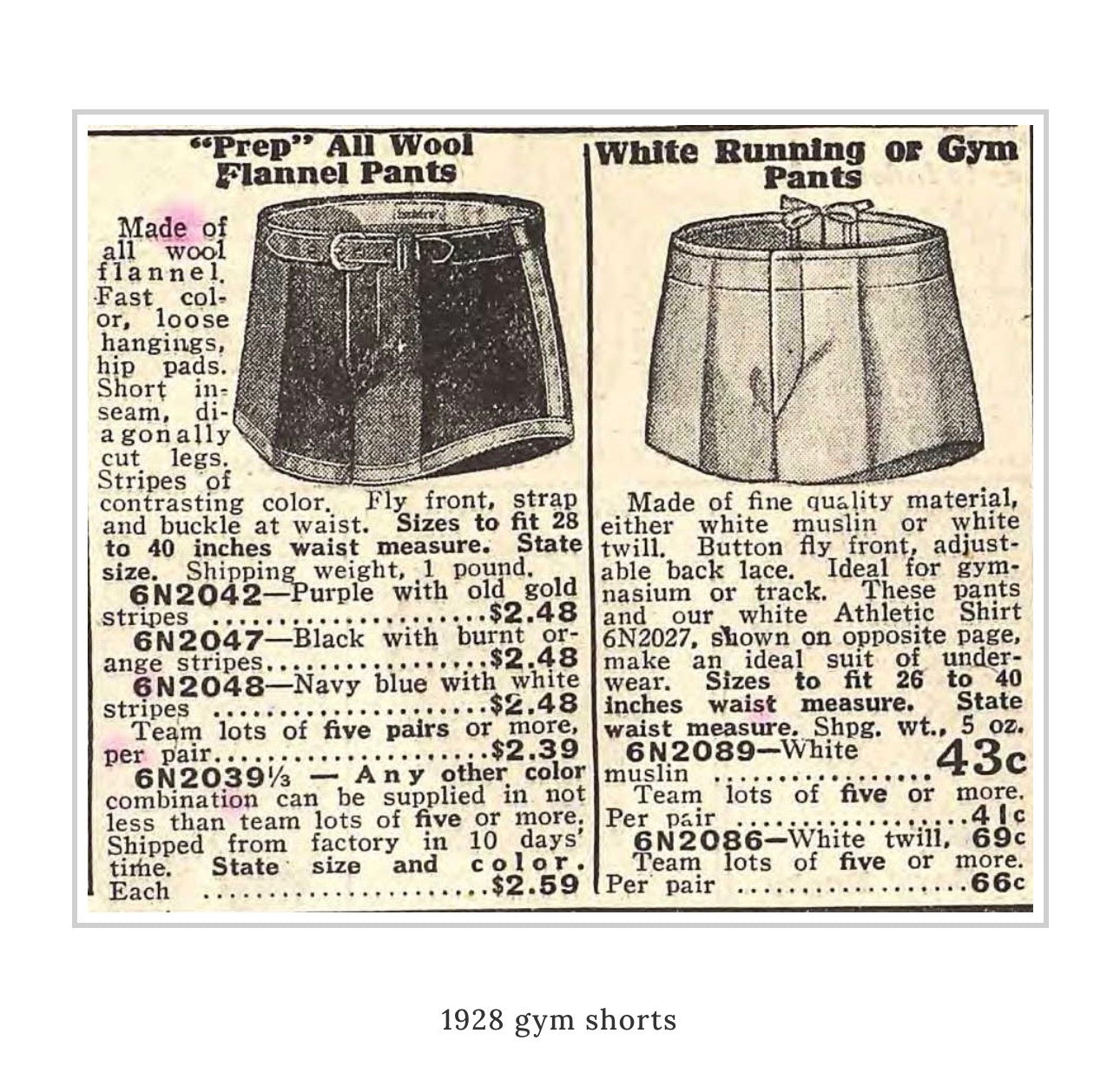
- camp short style - mini shorts
- belted / silver metal hardware
- button fly front w/ wood buttons
- diagonally cut legs
- loose hanging hip pads
- contrasting color side stripes
- silky/satin shine
- hand sewn #2 wool felt number on front hip
Very good vintage condition especially considering these are almost 90 years old. The #2 is loose on the top. Interior padding has some staining. No rips, holes or major signs of wear. No interior brand or size tags.
HISTORY:
From the turn of the century to the 1950s (and most of the 60s), men’s vintage workout clothes took inspiration from underwear in designing cool, loose, comfortable clothes for active sports and exercise routines. It was one of the only times a man could wear shorts or a sleeveless shirt and not be inappropriately dressed.
Workout clothes started with shorts and a tank top then moved to shorts and a T-shirt. The warm fleece sweatshirt and sweatpants was worn as warm up clothes or for more mild sports. The sweatshirt alone was trendy off the courts too.
While gym clothes changes were very slow between the late 1920s and 1960s, a new wave of men’s vintage workout clothes was just on the horizon.
WOOD BUTTONS:
Wooden buttons were used on gym-related apparel, specifically in women's gym suits and early athletic shorts, primarily during the 1920s to the 1940s.
- 1920s–1930s: Gymsuits for women often featured button-front or button-back shirts, paired with bloomers or early, loose-fitting shorts.
- 1940s: During World War II, shortages of materials led to a higher usage of poorer or natural materials, including wood, for functional buttons on garments.
- Context: While wood was used for buttons from the Medieval period onward, its use on gym apparel was part of the era when cotton, wool, and linen garments were fastened with natural, inexpensive, and readily available materials before plastic took over the industry.
-
Decline: By the 1950s, more modern materials like plastics (such as Casein) became the standard for sportswear due to better durability and lower cost.